Areas
Dubai Academic City: Buying Guide, Prices & Listings
A TECOM education free zone in eastern Dubailand, built around dozens of university campuses, with a newly launched cluster of freehold villas on its edge.
FreeholdTwo-part
Areas
A TECOM education free zone in eastern Dubailand, built around dozens of university campuses, with a newly launched cluster of freehold villas on its edge.
Dubai Academic City — formally Dubai International Academic City (DIAC), and often shortened to “Academic City” — is a TECOM Group free zone in eastern Dubailand established in 2007 and dedicated to foreign higher education. Per DIAC’s own materials, it describes itself as the region’s largest academic hub, home to over 27,000 students and academics; a January 2026 DIAC press release reported the student body had grown a further 15% year-on-year. Dozens of international university campuses operate here, including Heriot-Watt University Dubai (established 2005 as the first foreign university campus in DIAC, with more than 4,500 students from over 90 countries), University of Wollongong in Dubai (an 850,000 sq ft campus), Murdoch University Dubai, Middlesex University Dubai, The British University in Dubai, American University in the Emirates and Zayed University — whose complex near one of the free zone’s entrances covers 100,000 sq m and has capacity for 4,000 students across six interconnected buildings, per Bayut’s own Academic City area guide.
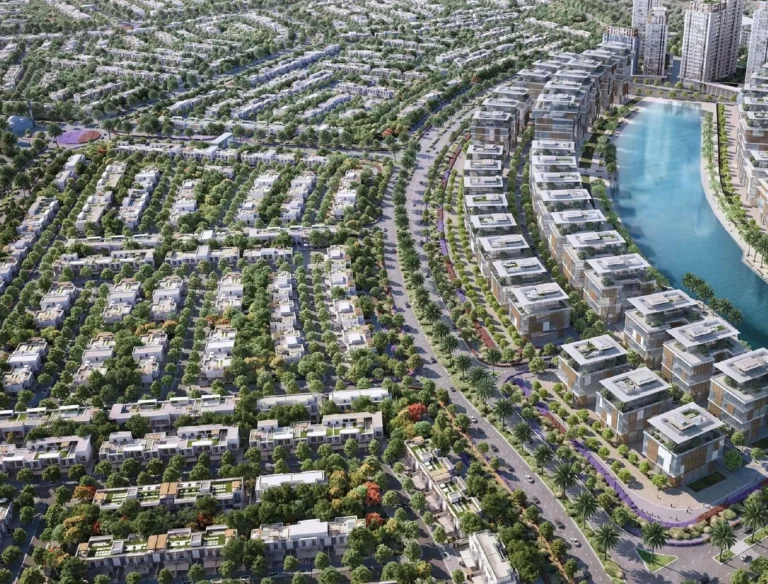
This is an education-and-staff-housing free zone with a newly launched freehold residential layer on its edge, and understanding that structure is what makes the opportunity here clear. The built residential stock is dominated by institutionally owned, purpose-built student and staff accommodation — large blocks let to a steady academic tenant base. What has genuinely opened up in the last couple of years is freehold villas and townhouses, launched by Danube Properties and Binghatti in the adjacent Al Rowaiyah First masterplan and marketed under the Academic City name. That makes this a fit for two quite different buyers: a landlord happy to operate in the purpose-built student-housing space, or an investor buying an off-plan freehold villa near a large, stable institutional tenant base.
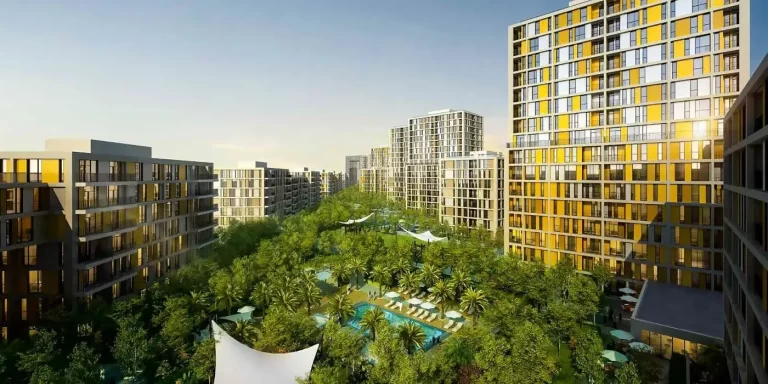
The existing built stock is almost entirely purpose-built rental accommodation for students and academic staff. The Myriad, completed in 2020 on 60,000 sq m with roughly 1,820 rooms across a six-storey complex (green courtyards, pools, gyms and coffee shops included), is wholly owned and operated by Strategic Housing Group in partnership with FIM Partners. Al Shiba Complex and a number of smaller residential blocks near BITS Pilani and other campuses offer studio-to-2-bedroom rental units aimed at the same tenant base. On the buy side, Bayut’s own for-sale listings for Academic City, accessed 13 Aug 2026, included two large land plots priced at AED 61,015,999 and AED 69,934,425 — substantial development sites for buyers working at that scale. The freehold buying activity carrying the Academic City name today sits in Al Rowaiyah First, a masterplan area immediately adjacent to DIAC’s own free zone boundary: Danube Properties’ Greenz (3-, 4- and 5-bedroom townhouses and villas from 2,350 to 3,800 sq ft, priced from AED 3.5 million, Q4 2029 handover) and Binghatti’s Tilal Binghatti (roughly 1,200 units spanning 4-bedroom townhouses from AED 4.2 million up to mansion-grade villas, handover expected around 2028–2029). Your Fidu agent will confirm whether a specific plot sits inside DIAC’s own free zone boundary or the neighbouring Al Rowaiyah masterplan, and which amenities and completion timeline apply to it.
Dubai’s freehold framework for foreign ownership traces back to Regulation No. 3 of 2006, and the Academic City/Al Rowaiyah corridor is marketed and sold to international buyers as freehold, consistent with its position in the wider Dubailand freehold belt. As with any Dubai freehold purchase, confirm a specific unit or plot’s registration status via DLD or the Dubai REST app before signing — your Fidu agent will handle that check with you.
The property-investor Golden Visa requires a Dubai Land Department valuation of at least AED 2,000,000. Both active freehold launches clear that threshold individually — Greenz starts at AED 3.5 million and Tilal Binghatti at AED 4.2 million — so a buyer purchasing into either qualifies on the unit price alone, subject to DLD’s own valuation at the time of purchase.
Academic City combines a mature institutional base with a genuinely new freehold residential offer. The free zone itself is mature: DIAC has operated since 2007 and reported a further 15% growth in its 27,000-plus student body in a January 2026 press release. What is genuinely new is the freehold residential product built around it. The Myriad, the area’s flagship purpose-built housing block, completed in 2020; Greenz by Danube and Tilal Binghatti, the two active freehold launches, are both under construction with handovers expected in the 2028–2029 window. Build-out continues in the Al Rowaiyah pocket through to those handover dates, while the free zone around it is fully built out and operating.
Academic City does not appear in Bayut’s DLD-transaction-based Dubai Sales Market Report H1 2026, and Bayut’s own Academic City area guide contains no sale-price table at all — Fidu checked the guide’s underlying content directly and found rental figures in prose but nothing on sale prices. The only concrete for-sale reference points Fidu could verify were the two land plots referenced above, at AED 61,015,999 and AED 69,934,425 — bare land, not a like-for-like comparison to a built home — and the two developers’ own starting prices: Greenz by Danube from AED 3.5 million for a 3-bedroom townhouse, and Tilal Binghatti from AED 4.2 million for a 4-bedroom townhouse. There is no bedroom-by-bedroom apartment sales figure to report because the existing apartment-style stock is institutionally owned rental accommodation rather than individually titled and resold, so no resale price series exists for it to estimate from.
Bayut’s own Academic City area guide (narrative text rather than a DLD-sourced data table) puts studio rents “starting from AED 16,000” a year on an average living area of about 460 sq ft, 1-bedroom rents between AED 29,000 and AED 31,000 on an average of about 826 sq ft, and 2-bedroom rents around AED 38,500 a year. The same guide cites building-level figures — studios at The Myriad from roughly AED 2,200 a month (about AED 26,400 a year), and Al Shiba Complex apartments averaging around AED 16,000 a year. These sit at the entry end of the range, so treat them as a floor and ask your Fidu agent for current asking rents on a specific building. Demand is anchored by DIAC’s tens of thousands of students and academic staff, which gives Academic City a reliable, self-renewing tenant base that runs largely independently of the wider Dubai rental cycle — lettings move quickly around the admission season, and well-presented units are typically taken up fast.
Academic City sits at an unusual and genuinely interesting point in its cycle: a long-established rental market with a freehold market only now arriving alongside it. The existing rental stock — The Myriad, Al Shiba Complex and similar blocks — is institutionally owned and let rather than individually traded, which is exactly what gives the area its stable, DIAC-anchored tenant base and its consistent year-round occupancy. The first freehold villas, Greenz and Tilal Binghatti, complete in 2028–2029 and will establish the area’s first owner-level returns. Your Fidu agent can share current rental figures and the projected returns on any specific launch you are considering.
Exact rates vary by building and are published per property on Mollak, RERA’s official service-charge platform, which is the correct place to check before buying once a specific building’s charges are registered there.
Academic City has no Dubai Metro station of its own. The nearest station is Al Rashidiya on the Green Line, roughly 19km away — about a 15-minute drive in typical traffic. RTA Bus 365 runs through Academic City and connects to Al Rashidiya Metro Station, Dubai Silicon Oasis and International City, per Bayut’s own area guide. Road access runs via Emirates Road (E611), Dubai–Al Ain Road (E66), Manama Street (D67) and Sheikh Zayed bin Hamdan Al Nahyan Street (D54). Most university campuses have their own parking with capacity for over 1,000 vehicles; the free zone is built around car and bus access rather than walkability, and a car is close to essential for anyone not living within walking distance of their own campus.
Two K-12 schools sit physically inside Academic City. German International School Dubai relocated from Al Quoz to a purpose-built Academic City campus in 2015; it teaches the full German curriculum from Pre-primary to Grade 12, leading to the Deutsches Internationales Abitur, and was rated Very Good by KHDA in the 2023–2024 inspection cycle — its first upgrade after nine consecutive Good ratings. Dubai English Speaking College teaches the British curriculum (GCSE, A-Level and BTEC) for Years 7 to 13 and was rated Outstanding by KHDA in 2023–2024, its twelfth consecutive Outstanding rating since 2012–2013. Dubai English Speaking School is also opening a new primary campus, DESS Primary Academic City, for the 2025–2026 academic year, alongside its long-established DESS Primary Oud Metha campus — genuinely new enough that it has no KHDA inspection rating yet, so treat it as unproven for now rather than assuming it inherits its sister school’s Outstanding rating. Lycée Français International Georges Pompidou, whose main branch is in Oud Metha, also operates a branch inside Academic City. Beyond K-12, the free zone’s defining education feature is its density of university campuses rather than school choice — most of the institutions here serve students aged 18 and up, not families with younger children.
Everyday retail inside Academic City itself is modest and campus-oriented: a Circle K convenience store near Zayed University, West Zone Supermarket and Thomsun Supermarket along the surrounding roads, and All Day Minimart DIAC plus a second Circle K within the free zone, per Bayut’s area guide. For bigger shops, Choitrams and Spinneys both sit in neighbouring Dubai Silicon Oasis rather than inside Academic City. Each university campus has its own on-site medical facility for students and staff, but the nearest hospital — Fakeeh University Hospital — along with clinics such as Aster Clinic and Magnum Gulf Medical Centre, are a short drive away in Dubai Silicon Oasis, not inside Academic City itself.
Dining inside the free zone is genuinely limited — mostly campus food courts and small F&B outlets serving the student population. For a proper restaurant strip or mall, residents typically drive about 10 minutes to International City along Manama Street, or into neighbouring Dubai Silicon Oasis.
There is no major destination landmark inside Academic City itself. Al Habtoor Polo and Resort Club, west of the community off Emirates Road, and Desert Palm Polo Club in Al Warsan are the closest recreational draws for residents, and several small neighbourhood parks — Central Park, Joury’s Park, Silicon Park and Triangular Park — sit within roughly a 7-minute drive, mostly in Dubai Silicon Oasis.
On-campus sports and fitness facilities — Crystal Sports Tennis Academy, Dubai Water Polo Club, Elevation Fitness at Amity University and Zayed University’s own gym — serve students and staff. The Myriad’s own grounds include pools and landscaped courtyards, and Greenz’s and Tilal Binghatti’s villa clusters will carry their own gardens and pools once built, but the free zone as a whole was not designed around resident-facing green space the way a conventional residential masterplan is — outdoor amenity here is attached to individual buildings rather than shared community parkland.
Bayut’s own assessment of the area is blunt: Academic City “provides a wide array of options in terms of educational choices but has limited residential options,” and accommodation can fill up during peak admission season, leaving prospective tenants with few choices at exactly the time demand is highest. There is effectively no conventional apartment resale market to buy into today, and freehold buying here currently means an off-plan villa in the adjacent Al Rowaiyah masterplan, with a multi-year wait to a 2028–2029 handover and no completed rental history to underwrite a yield against. There is no Metro station inside the community, and much of the everyday retail, dining and healthcare that residents actually use belongs to neighbouring Dubai Silicon Oasis rather than Academic City itself — worth confirming in person before assuming an amenity is walkable.
The closest useful comparison, per Bayut’s own “nearby areas” section, is International City, about 10 minutes away along Manama Street — also freehold, budget-oriented and without a Metro station, but with an established, individually titled apartment resale and rental market that Academic City currently lacks. Against Dubai Production City (IMPZ), the comparison is really “sector-specific free zone with a growing residential layer”: both began as TECOM free zones built around one industry — media and production for IMPZ, higher education for Academic City — but IMPZ has a longer-established, individually owned apartment market than Academic City’s still-nascent freehold offering. Choose International City for a proven, liquid low-cost apartment market; choose Dubai Production City (IMPZ) for a similar free-zone-turned-residential story with more resale history; choose Dubai Academic City for proximity to one of the region’s largest university clusters and ground-floor pricing on its newest freehold villas.
Emirates Road (E611), Dubai–Al Ain Road (E66), Manama Street (D67) and Sheikh Zayed bin Hamdan Al Nahyan Street (D54) are the main routes in and out. Downtown Dubai is roughly 18 minutes away by typical-traffic estimates, and Dubai International Airport is roughly 15–20 minutes away. All of the above are car journeys; RTA Bus 365 is the only rail-adjacent public transport option running through the community itself.
On the numbers Fidu could verify, this isn’t yet a proven investment case in the way an established community is — there’s no DLD-transaction-based sales data, no working apartment resale market, and no completed rental history for the new freehold villas to calculate a yield from. What is verifiable is the demand driver underneath it: DIAC reported 15% growth in its 27,000-plus student body in January 2026, a genuinely large and still-expanding tenant base for anyone operating in the purpose-built student-housing space. For buyers, the case is really about Greenz and Tilal Binghatti specifically — entry pricing from AED 3.5–4.2 million, both individually clearing the AED 2,000,000 Golden Visa threshold, against a multi-year wait to 2028–2029 handover and genuine off-plan construction risk. Get current, DLD-verified pricing for a specific unit before treating any developer projection as a number to act on, and don’t assume the free zone’s own maturity extends to the freehold residential product built around it, which is genuinely new.
Academic City is an early-stage freehold market attached to a long-established institutional one, and this guide reports it that way. Figures are given where a named, dated source supports them, and your Fidu agent supplies live building-level pricing, service charges and yields on request. The area’s underlying strength is well documented: DIAC is a mature and growing academic base, while the freehold residential product around it is new — which is precisely where the opportunity sits.
Where a figure could not be tied to one of these named, dated sources, it is described qualitatively rather than estimated.
No properties found in Academic City at the moment.