Areas
Sheikh Zayed Road: Buying Guide, Prices & Listings
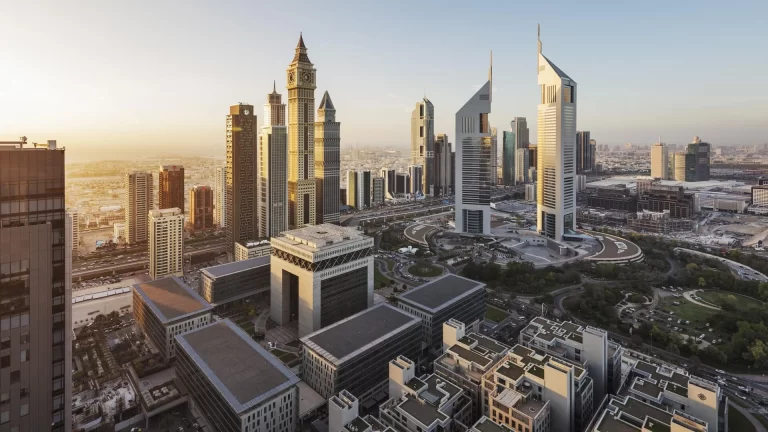
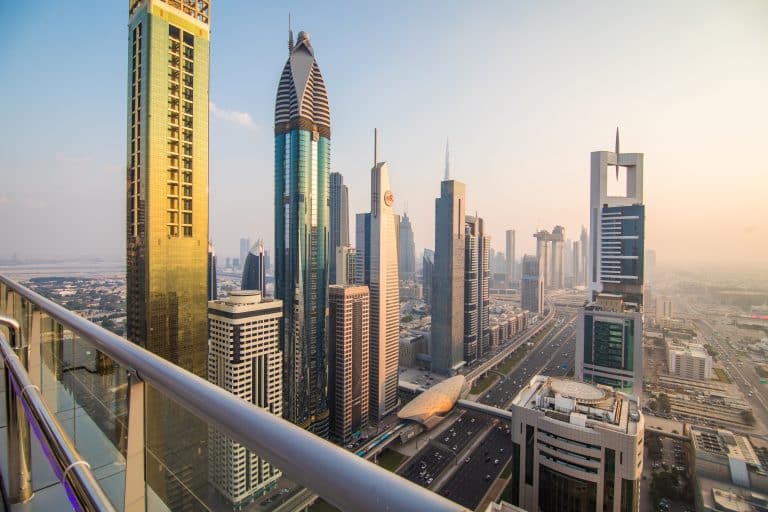
High-rise mixed-use towers along Dubai's main highway, between the World Trade Centre and Interchange 1.
Areas
High-rise mixed-use towers along Dubai's main highway, between the World Trade Centre and Interchange 1.
Sheikh Zayed Road (E11) is Dubai’s principal highway, the main road connecting the seven emirates. As a residential address, “Sheikh Zayed Road” specifically refers to the stretch of mixed-use towers lining the road between the World Trade Centre and Interchange 1 — a corridor of skyscrapers combining offices, hotels and residential apartments rather than a self-contained masterplan community. Living here means being directly on Dubai’s central spine, within reach of DIFC, Downtown Dubai and the Trade Centre district.
A high-rise, city-centre apartment address for buyers or tenants who want direct Metro access, skyline views and proximity to Dubai’s main business districts. It is best suited to urban professionals and investors targeting corporate-tenant demand; buyers looking for a landscaped family community with on-site schools and parks should speak to a Fidu agent about the masterplan communities built for exactly that.
Housing stock is exclusively high-rise apartments within individual mixed-use towers along the road — tower by tower, rather than a masterplan’s named sub-communities. Units range from one-bedroom apartments to larger penthouses, and many buildings combine residential floors with hotel-style amenities, offices or serviced-apartment operations within the same tower.
Freehold status on Sheikh Zayed Road varies by specific tower and plot rather than applying uniformly to the whole corridor, since it runs through and adjacent to several different registered areas. Some towers are registered freehold under Regulation No. 3 of 2006 and the designations added since, while others may sit on leasehold or restricted land. Your Fidu agent will confirm a specific building’s registration status via DLD or the Dubai REST app, so you know exactly what tenure comes with the unit.
The property-investor Golden Visa requires a DLD property valuation of at least AED 2,000,000. Sheikh Zayed Road is generally a premium, centrally-located address, so larger units in more prominent towers are more likely to clear this threshold — and with genuine variety in age, size and specification along the corridor, your Fidu agent will confirm the DLD valuation on the specific unit and can shortlist the towers where the threshold is comfortably met.
Most towers along the established stretch of Sheikh Zayed Road between the World Trade Centre and Interchange 1 are long-completed and occupied, some dating back decades as part of Dubai’s earlier high-rise development. The corridor’s stock is predominantly delivered and occupied, so buyers here are choosing from finished, occupied towers; your Fidu agent will confirm the status of any specific building you are considering.
Bayut’s Sheikh Zayed Road area guide, built from asking-price listings over the trailing 12 months, puts average apartment sale prices at AED 5,811,000 (1-bed), AED 4,902,000 (2-bed) and AED 10,290,500 (3-bed) — note the 1-bed average sits above the 2-bed average, which reflects how much choice the corridor offers tower by tower (Bayut’s own building breakdown shows 1-bed asking prices in one tower, Burj Azizi, spanning AED 3 million to AED 50 million). Read these as corridor-wide averages; your Fidu agent will provide the per-square-foot rate and current comparables for the specific building you are considering.
The same Bayut area guide puts average asking rents at AED 67,000 (studio), AED 103,000 (1-bed), AED 182,500 (2-bed), AED 188,000 (3-bed) and AED 532,000 (4-bed), based on listings over the trailing 12 months. Demand is driven by corporate executives and professionals working in nearby DIFC, Downtown Dubai and the wider central business district who want a short commute and direct Metro access.
Bayut’s own ROI calculation for Sheikh Zayed Road apartments, based on user searches over the trailing 12 months, comes out at 1.67% (1-bed), 2.74% (2-bed) and 1.76% (3-bed), reflecting asking sale prices that sit well above the rents this corridor commands, particularly in the newer ultra-premium towers. This is a listings-and-search-based estimate rather than a DLD-confirmed transaction yield, and it points to the corridor’s appeal as a capital-value and owner-occupier address; your Fidu agent can model income on a specific building where rental return is the priority.
Service charges vary by tower age, amenities and whether the building includes hotel-style services, and are published per property on Mollak, RERA’s official disclosure platform — your Fidu agent will confirm the exact figure for any unit you are considering.
This is the corridor’s clearest strength: the Dubai Metro Red Line runs directly parallel to Sheikh Zayed Road, with several stations serving buildings along the stretch between the World Trade Centre and Interchange 1, giving residents direct rail access without needing a car for many daily journeys. Parking is typically building-specific — covered or basement parking in most residential towers, with allocation and guest parking set building by building.
Families on the corridor draw on the schools of the adjacent residential districts — Al Wasl, Al Safa and Downtown Dubai are all immediately alongside — and your Fidu agent can match the options and drive times to whichever end of the corridor a tower sits on.
Amenities here are delivered building by building — many towers include their own gyms, pools and hotel-style services on site. The corridor runs directly past major hotels, business towers and, toward the Trade Centre end, convention and exhibition facilities. For grocery and everyday retail, DIFC, Downtown and Al Wasl are all immediately adjacent.
Dining along Sheikh Zayed Road runs through hotel restaurants and business-district venues — the corridor passes numerous five-star hotels, each with its own dining offer. Destination shopping means a short drive or Metro ride to Dubai Mall or Mall of the Emirates, both reachable via the Red Line.
The Dubai World Trade Centre anchors the corridor’s northern end, hosting major exhibitions and conferences, with the Emirates Towers and views toward Burj Khalifa defining the skyline along the route. This is Dubai’s business-and-hospitality landmark corridor.
Safa Park and Zabeel Park both sit close by, reachable by a short drive or a Metro connection from the corridor’s own stations.
Sheikh Zayed Road is a business-and-Metro address rather than a landscaped family masterplan, which is precisely what its residents come for: the Red Line runs directly parallel with several stations along the corridor, giving direct rail access without needing a car for many daily journeys. The adjacent districts of Al Wasl, Al Safa, Downtown Dubai and DIFC cover schools and everyday retail, with Safa Park and Zabeel Park a short drive or Metro connection away. Building age, specification and amenities range widely along the corridor, which gives buyers a broad field to choose from — your Fidu agent will assess a specific tower on its own merits, from service charges to Metro-station proximity, before you make an offer.
Sheikh Zayed Road’s closest comparisons are DIFC and Downtown Dubai, both of which the corridor runs directly past. Against DIFC, the comparison is community structure: DIFC is a defined financial-district masterplan with its own retail and dining core, while Sheikh Zayed Road runs directly alongside that same retail and dining core, with its own Metro stations at the door. Against Downtown Dubai, the difference is scale and identity: Downtown is a purpose-built, walkable destination anchored by Burj Khalifa and Dubai Mall, while Sheikh Zayed Road is defined by its role as the city’s central artery rather than a destination in itself. Choose DIFC for a self-contained financial-district community with its own retail core; choose Downtown Dubai for the most walkable, amenity-rich central address; choose Sheikh Zayed Road for direct Metro access and central positioning at a potentially lower entry price than either, with DIFC’s and Downtown’s amenities immediately alongside.
By definition, Sheikh Zayed Road IS the main route to and from most of central Dubai — Downtown Dubai, DIFC and Business Bay are all within a short drive or Metro ride, and the Red Line running parallel to the road connects efficiently toward both Dubai Marina and the older city core. Dubai International Airport is a reasonable drive from the Trade Centre end of the corridor. The Red Line running parallel keeps peak-time journeys off the road entirely for many residents.
Bayut’s own ROI estimate for the corridor runs at 1.67%–2.74% depending on unit size, reflecting asking sale prices that sit well above the rents this corridor commands, especially in the newer ultra-premium towers — a capital-value story rather than an income one. Direct Metro access and a central, business-district-adjacent location are durable, structural advantages for corporate rental demand, and the range of building ages and specifications along the corridor means individual towers can outperform the corridor average. Your Fidu agent will assess individual buildings on their own merits — age, specification, service charges and Metro-station proximity — and shortlist the ones that match your objective.
Sales, rental and ROI figures are drawn from Bayut’s Sheikh Zayed Road area guide, based on live listings and user searches over the trailing 12 months — a corridor with unusually wide variety tower by tower, so these are corridor-wide averages and a Fidu agent provides per-tower comparables. Service charges are published per property on Mollak, RERA’s official platform, and are confirmed by a Fidu agent for the specific building.
Where a figure could not be tied to one of these named, dated sources, it is described qualitatively rather than estimated.
No properties found in Sheikh Zayed Road at the moment.